Vehicles
Exploring the Benefits of Modular Vehicle Platforms in Automotive Production
For over a century, the fundamental goal of the automotive assembly line remained largely unchanged: produce a single vehicle in massive quantities to drive down the cost per unit. When consumer tastes were relatively uniform, this rigid approach to manufacturing was highly lucrative. However, the modern automotive landscape is defined by aggressive fragmentation. Today’s consumers demand an unprecedented variety of vehicles, ranging from compact urban hatchbacks and rugged sport utility vehicles to hyper-efficient electric crossovers and high-performance sedans.
For automakers, reconciling this demand for infinite variety with the harsh economic realities of mass production presented a seemingly impossible mathematical puzzle. Engineering a brand-new vehicle from the ground up costs billions of dollars and takes years of development. To survive and remain profitable, the industry had to abandon the concept of building dedicated, bespoke chassis for every model in their lineup. The solution to this modern manufacturing crisis arrived in the form of the modular vehicle platform, a brilliant engineering philosophy that has completely revolutionized how cars are designed, built, and brought to market.
Demystifying the Modular Platform Architecture
To understand the benefits of modularity, it is necessary to differentiate a modern platform from a traditional automotive chassis. Historically, a chassis was a rigid physical frame upon which a specific car was built. If a manufacturer wanted to build a wider car, a longer car, or a taller car, they had to design and engineer an entirely new frame.
A modular platform is not a single, fixed physical structure; it is a highly adaptable, standardized architectural system. It dictates a specific set of non-negotiable dimensions—often referred to as hard points—such as the distance between the firewall and the front axle, or the exact mounting locations for the engine and transmission. Everything else, known as soft points, can be stretched, widened, or compressed. The wheelbase, track width, ride height, and overall body style can be manipulated endlessly around the core hard points. This allows an automaker to take the exact same underlying engineering architecture and use it to build a low-slung sports sedan, a practical family station wagon, and a three-row SUV.
Slashing Research and Development Expenditures
The most immediate and profound benefit of utilizing modular platforms is the drastic reduction in research and development costs. In the automotive industry, the vast majority of a vehicle’s engineering budget is spent on the components the consumer never actually sees or touches. The structural crash structures, the electrical wiring harnesses, the suspension geometry, and the HVAC routing require millions of hours of testing and computer simulation to perfect.
By utilizing a modular platform, automakers only have to engineer these highly complex underlying systems once. The core architecture is subjected to rigorous crash testing, aerodynamic refinement, and durability trials. Once the platform is perfected and certified, it can be shared across a dozen different vehicles spanning multiple brands within a corporate portfolio. The engineering budget can then be reallocated away from reinventing structural hard points and redirected toward the elements that actually drive consumer purchasing decisions: striking exterior design, premium interior materials, and advanced infotainment software.
Accelerating the Speed to Market
In a consumer market driven by rapid shifts in taste and emerging technology, time is a manufacturer’s most precious resource. When global consumer preference violently shifted away from sedans and toward crossover SUVs, automakers who relied on traditional, bespoke engineering architectures were caught off guard. They faced a four-to-five-year development cycle to bring a new SUV to market, losing billions of dollars in potential sales as they scrambled to catch up to the trend.
Modular platforms act as a powerful accelerator for product development. Because the complex foundational engineering is already complete, designers only need to engineer the top hat—the visible exterior body and interior cabin that sits atop the platform. This streamlined process allows manufacturers to concept, design, and launch a completely new vehicle in a fraction of the time. When a new market niche emerges, an automaker with a robust modular platform can respond almost immediately, adapting their existing architecture to capture the new audience while their competitors are still sketching chassis designs on a whiteboard.
Maximizing Factory Flexibility and Utilization
Before the advent of modularity, automotive assembly plants were largely inflexible. A factory was painstakingly tooled and calibrated to produce one specific vehicle. This created a massive financial vulnerability known as factory underutilization. If a factory was dedicated to building mid-size sedans, and the market demand for sedans suddenly plummeted, the factory would sit half-empty, bleeding money through fixed overhead costs. Meanwhile, another factory building high-demand trucks might be operating at maximum capacity, entirely unable to meet the overflow in consumer demand.
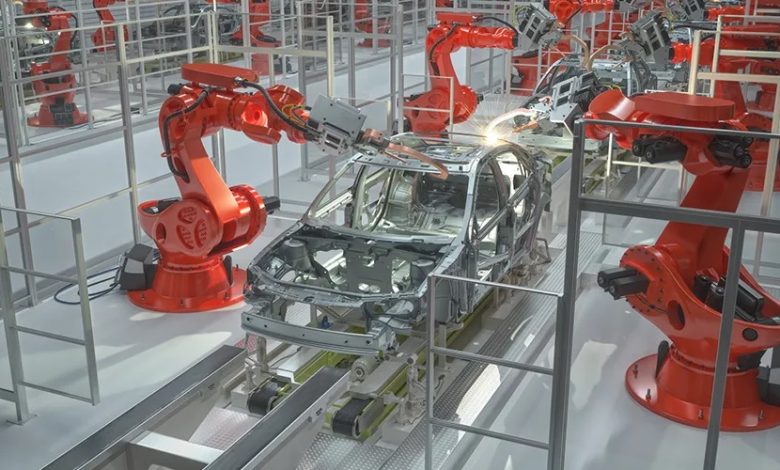
Modular platforms have ushered in the era of mixed-model production. Because the underlying hard points and assembly sequences of a modular platform are identical regardless of the body style, a single assembly line can seamlessly build multiple different vehicles back-to-back. A robotic welding arm can secure the chassis of a compact hatchback, and the very next vehicle coming down the line can be a mid-size crossover. This extraordinary flexibility protects manufacturers from market volatility. Production volumes can be dialed up or down dynamically based on real-time sales data, ensuring that factories are always operating at maximum profitability.
The Ultimate Catalyst for the Electric Vehicle Transition
The transition from internal combustion engines to battery electric vehicles represents the most significant industrial shift since the invention of the assembly line. Modular engineering is not just beneficial for this transition; it is the fundamental strategy making the EV revolution financially viable.
In the realm of electric vehicles, the modular platform has evolved into what the industry calls the skateboard architecture. This design packages the heavy battery packs flat into the floorpan of the vehicle, with the electric motors mounted directly on the front and rear axles. The resulting platform looks exactly like a giant skateboard. Because there is no bulky engine block, transmission tunnel, or exhaust routing to accommodate, the skateboard is the purest form of modularity ever created.
Automakers can take a single electric skateboard platform and simply stretch the center section to add more battery modules for longer-range vehicles. They can mount a sleek sports car body onto a dual-motor skateboard, or place a boxy delivery van body onto a single-motor version. This unparalleled versatility is allowing legacy automakers and new startups alike to rapidly populate their showrooms with a diverse array of electric vehicles without bankrupting themselves on specialized R&D.
Enhancing Quality Control and Supplier Leverage
Managing the supply chain for a modern automaker is a logistical tightrope walk involving thousands of global vendors. When a manufacturer builds completely different chassis for every car in their lineup, they are forced to order relatively small batches of distinct parts. This fragments their purchasing power.
By unifying their lineup around a few core modular platforms, manufacturers achieve staggering economies of scale. Instead of ordering five hundred thousand steering columns of five different designs, an automaker can order two and a half million identical steering columns. This massive volume gives the manufacturer immense leverage to negotiate lower per-unit prices with their suppliers.
Furthermore, this extreme parts consolidation acts as a natural quality control mechanism. When a specific water pump, brake booster, or electrical relay is utilized across millions of vehicles worldwide, any potential defect is identified and rectified incredibly quickly. By the time a modular platform reaches its second or third year of production, the core components have been stress-tested across billions of real-world miles in every conceivable climate. The result is a more reliable, refined vehicle for the end consumer.
The modern automotive industry operates on razor-thin margins, constantly battling volatile material costs, shifting environmental regulations, and fickle consumer trends. In this high-stakes environment, the modular vehicle platform is no longer just a clever manufacturing strategy; it is the foundational requirement for survival. By standardizing the invisible, automakers have finally unlocked the freedom to endlessly customize the visible, delivering the vast array of vehicles that modern drivers demand without sacrificing the efficiency required to stay in business.