Used Car
How to Compare Used Car Listings Without Overlooking Important Details
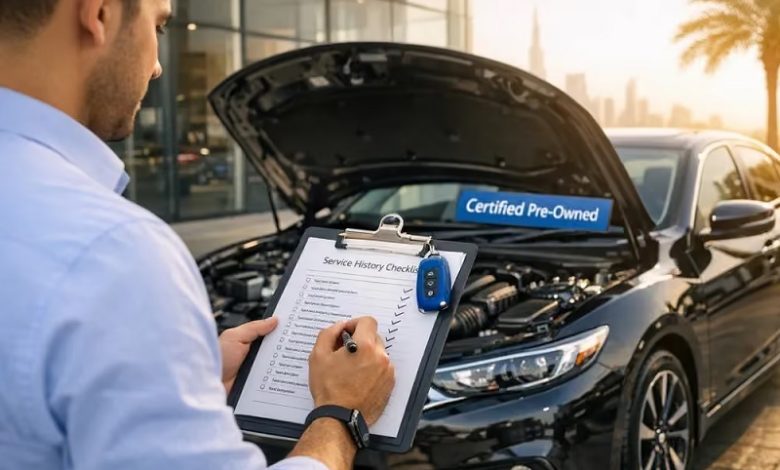
The internet has fundamentally democratized the used car market. We no longer spend our weekends walking sun-baked asphalt lots, fending off aggressive salespeople while relying entirely on their verbal assurances. Instead, we have access to thousands of vehicles directly from our living rooms. But this massive, decentralized inventory creates a new problem: digital fatigue. When you are staring at forty different listings for a commuter sedan, they all begin to blur together. Buyers start making major financial decisions based on arbitrary factors like paint color or a slightly lower asking price, completely missing the subtle digital clues that separate a well-maintained machine from a looming financial disaster.
Comparing used car listings requires a forensic mindset. You must learn to analyze what is intentionally left out of an advertisement just as ruthlessly as you read what is prominently displayed. Before you ever schedule a test drive, you can weed out the vast majority of problematic vehicles by mastering the art of the digital comparison.
Decoding the Photographic Evidence
It is incredibly easy to get distracted by a freshly washed car sparkling under the midday sun. However, the photographs in a used car listing are your first line of defense. They contain vast amounts of unregulated information if you know exactly where to look.
The Red Flag of Missing Angles
A trustworthy seller, whether a private owner or a dealership, will provide a comprehensive 360-degree digital walkaround. When analyzing a listing, do not just casually swipe through the provided photos; catalog the specific angles that are conspicuously missing. If a listing features fifteen photos of the exterior but only one blurry, wide-angle shot of the dashboard, you should immediately be suspicious.
Sellers frequently omit photos of the driver’s side seat bolster because the leather is heavily torn from years of sliding in and out. They skip photographing the headliner because the fabric is sagging. If there are no close-up photos of the steering wheel or the gear shifter, the seller might be attempting to hide severe, shiny wear patterns that completely contradict the low mileage claimed on the odometer. A premium listing leaves nothing to the imagination.
Identifying Environmental and Staging Clues
Look closely at the environment where the vehicle was photographed. A common tactical trick used to hide failing clear coat, heavy swirl marks, or severe scratches is photographing the vehicle immediately after hosing it down or shooting it in the rain. Water temporarily fills in micro-scratches and makes flat, neglected paint look glossy and deep. Always demand dry photos taken in natural daylight.
Furthermore, pay attention to the background of private party sales. If a supposedly private seller has five other cars parked on their lawn with price tags in the windows, you are not dealing with a private owner. You are dealing with a curbstoner—an unlicensed, unregulated dealer who flips auction cars for a quick profit. Buying from a curbstoner leaves you with absolutely zero legal recourse if the transmission fails a week after the title is transferred.
Deconstructing the Written Description
The text box beneath the photos is where the seller’s true narrative lives. Generic, enthusiastic descriptions are generally useless for comparison purposes. You are looking for concrete, verifiable data points that prove the seller viewed the car as a machine requiring maintenance, rather than just an appliance.
Translating Automotive Sales Jargon
Used car listings have their own distinct dialect that requires precise translation. The phrase “all highway miles” is completely unprovable and is usually deployed as a preemptive excuse for an odometer that reads well over the market average. “Needs TLC” is an outright admission of severe cosmetic or mechanical neglect.
However, the most dangerous phrase in any used car listing is “just needs a sensor.” If a check engine light is illuminated and the fix was truly just a fifty-dollar sensor and ten minutes of labor, the seller would have replaced it to maximize their asking price. A seller claiming a car just needs a simple, cheap part is almost always masking a catastrophic mechanical failure, such as a burnt exhaust valve, a failing catalytic converter, or a stretched timing chain.
The Value of the Specificity Principle
When comparing two listings, prioritize the seller who utilizes the specificity principle. A poor listing reads: “Runs great, cold AC, good tires.” This tells you nothing. A premium listing reads: “Timing belt and water pump replaced at 85,000 miles. Michelin Defender tires installed last October with 7/32 tread remaining. Full synthetic oil changes every 5,000 miles.” The second seller kept meticulous records and understands the value of preventative care. Always favor the listing with a documented timeline of maintenance over one decorated with vague, excitable adjectives.
The Mileage Versus Maintenance Equation
One of the most persistent myths in the automotive world is that lower mileage always equates to a better vehicle. When filtering search results, buyers habitually sort from lowest mileage to highest, automatically discarding cars that cross the psychological threshold of one hundred thousand miles. This is a severe analytical error that will cost you money.
A vehicle that has traveled 80,000 miles but has never had its transmission fluid serviced, is riding on its original worn-out suspension, and is overdue for a brake job is a ticking financial time bomb. Conversely, a vehicle with 110,000 miles that just completed its major factory-mandated 100,000-mile service interval—including a new timing belt, fresh spark plugs, and a cooling system flush—is actually the superior, more reliable purchase. When comparing listings, you must evaluate where the car sits in its lifecycle maintenance schedule. Buying a low-mileage car right before its most expensive service is due simply transfers that massive financial burden onto your own shoulders.
Cross-Referencing the Geographic and Ownership History
The Vehicle Identification Number (VIN) is the digital fingerprint of the automobile. While most buyers know to check a vehicle history report for major accidents or salvage titles, they frequently overlook the highly revealing geographic and ownership narratives embedded in the data.
The Climate Factor
A ten-year-old truck that spent its entire life in upstate New York, Michigan, or coastal regions has been subjected to a decade of highly corrosive road salt or sea spray. Even if the exterior paint looks immaculate in the photos, the undercarriage, brake lines, and exhaust system will likely be heavily compromised by rust. If you are comparing that truck against an identical model that was exclusively registered in a dry climate like Arizona or Texas, the southern vehicle holds significantly more intrinsic value and structural integrity. Trace the registration history to understand the exact climate conditions the car was forced to endure.
The Hot Potato Effect
Pay close attention to the frequency of ownership transfers. A single-owner vehicle is the gold standard, as it usually guarantees a consistent maintenance philosophy. However, if a vehicle has had four owners in the last three years, you are witnessing the automotive equivalent of a hot potato. A rapid succession of ownership is a massive red flag. It almost always indicates that the vehicle suffers from a chronic, incredibly frustrating mechanical or electrical gremlin. Each successive buyer discovers the unfixable problem, grows exhausted trying to repair it, and quickly sells the car to offload the headache onto someone else.
Normalizing Price Across Exact Trim Levels
Finally, ensure you are genuinely comparing apples to apples. Automakers offer vastly different trim levels for the exact same model. A base-model sedan and a top-tier grand touring edition share the same silhouette, but the touring model features upgraded leather, a premium sound system, a more powerful powertrain, and advanced driver assistance sensors.
When a listing seems priced remarkably lower than the competition, closely inspect the interior photos to verify the trim level. Shady dealerships will often advertise a mid-level trim at a spectacular price to generate clicks, but the photos will clearly show the blank plastic switches and cloth manual seats of a base model. Additionally, when comparing a dealership listing to a private party listing, you must mentally add the dealership’s documentation and processing fees to their asking price. A dealership car listed at fifteen thousand dollars might actually cost over sixteen thousand out the door, changing the math completely when compared against a private seller who charges zero hidden administrative fees.
Mastering the digital comparison of used cars is an exercise in ruthless elimination. Your goal when scrolling through hundreds of listings is not to find the perfect car immediately, but to rapidly disqualify the hidden disasters. By learning to scrutinize missing photographic angles, decoding seller jargon, prioritizing service records over arbitrary mileage, and verifying geographic data, you construct a protective barrier around your wallet. When you finally step away from the computer to physically inspect a vehicle, you will do so with the confidence of knowing it has already survived a rigorous, uncompromising interrogation.